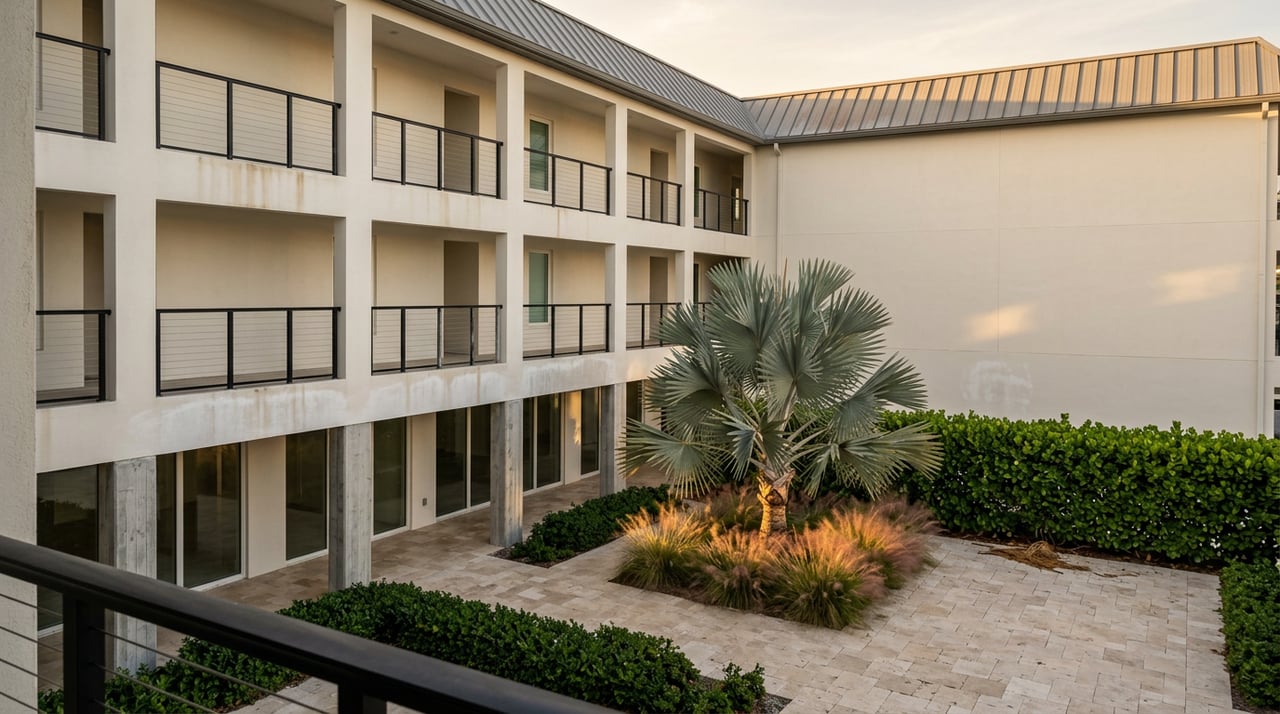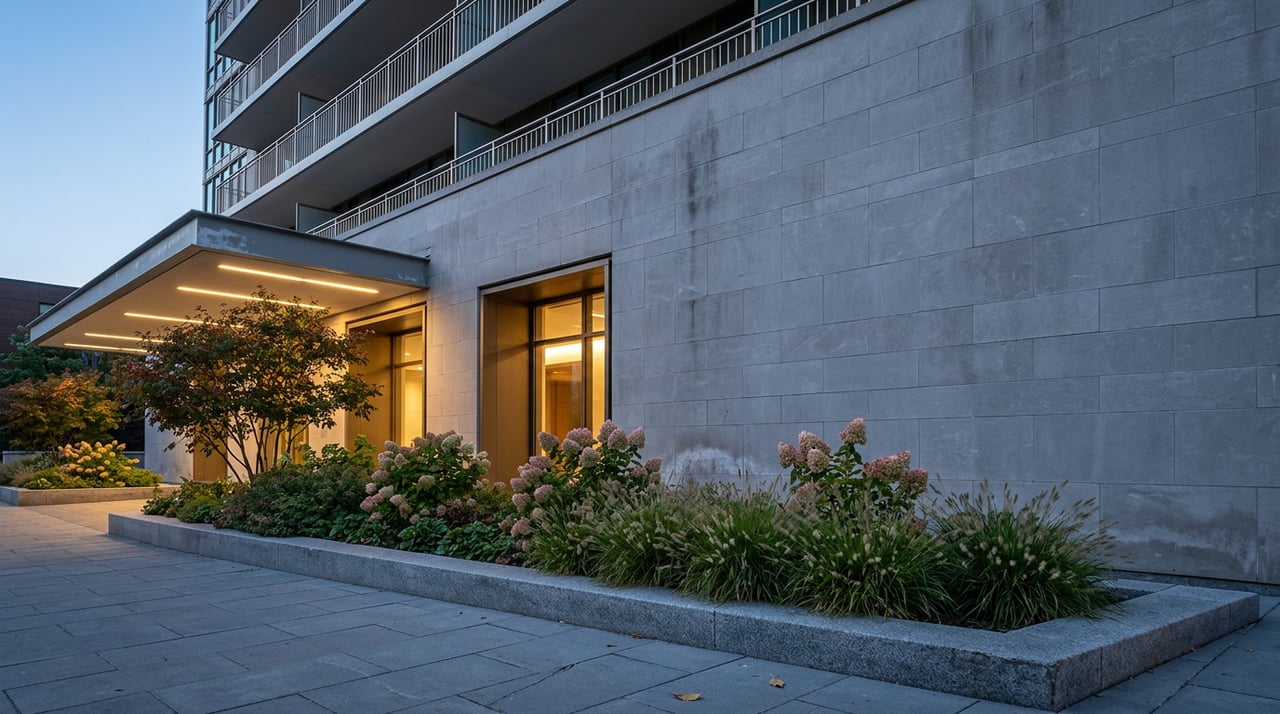
Two South Loop condos come up in the same search. Same price, same bedroom count, roughly the same square footage, ten blocks apart. One carries a $420 monthly assessment. The other carries $980. Most buyers register that difference as a preference, the way they register a north exposure or a second sink. It is not a preference. It is a price difference of roughly $78,000, and it is sitting in plain view on the listing sheet.
That gap is the single most useful thing to understand about buying here, and it is the thing the median price cannot tell you. South Loop is unusual among Chicago neighborhoods in that nearly its entire for-sale market is attached housing: high-rise towers, mid-rise buildings, loft conversions. Every one of those homes comes with a share of a building's operating budget and a share of its future capital bills. In a neighborhood of vintage two-flats, the roof is your problem alone. Here, the roof is a line item you inherit with a vote attached.
Do the conversion before you fall in love with the view
Freddie Mac's weekly survey put the 30-year fixed rate at 6.66% as of August 27, 2026, essentially flat from 6.65% the prior week and near its twelve-month high. At that rate, a 30-year payment costs about $6.43 per month for every $1,000 borrowed.
Run it backward. A $500 monthly assessment difference buys about $78,000 of mortgage. A $200 difference buys about $31,000. So the unit listed $40,000 cheaper with an assessment $300 higher is not cheaper. It works out to about $7,000 more in equivalent purchase price, and unlike the mortgage, the assessment is not fixed for thirty years.
The mortgage is the number you negotiate once. The assessment is the number that gets renegotiated every budget season without you in the room.
This is why two buildings that look interchangeable from the sidewalk trade so differently. What the assessment includes matters as much as its size. If heat, water, cable and internet are bundled, a $700 fee may be cheaper in practice than a $450 fee in a building where you pay all of it separately. Ask for the itemized budget, not the headline number.
Why the number keeps climbing after you own it
Boards across Chicagoland are not raising dues out of enthusiasm. Association fees in Chicago and the surrounding suburbs rose roughly 10% in 2024 and have kept climbing through 2025 and into 2026, with insurance the loudest driver. Condo and association insurance premiums jumped about 15% in 2023 alone, with further increases in the years after, as fewer carriers were willing to write policies on older buildings and catastrophe models were redrawn for Midwest weather exposure.
Illinois sets no hard ceiling on how much a board can raise regular assessments. What it does provide is Section 18(a)(8) of the Illinois Condominium Property Act, a threshold that gives unit owners a procedural path when a proposed budget's total assessments would exceed 115% of the prior year's. That is a mechanism, not a cap. Read the declaration. If you are unsure what governs your association, that is a question for a real estate attorney, not a listing agent.
The buildings are entering their expensive decade
South Loop's tower inventory skews heavily toward late-1990s and 2000s construction. That vintage is now arriving at the age when the big items come due at once.
Elevator systems typically need full modernization every 25 to 30 years, and the work runs into the hundreds of thousands of dollars per cab. Associations without deep reserves fund that through special assessments. Flat roofs, boilers and cooling towers follow similar clocks, and when they fail, the board cannot defer.
Then there is the facade, which is where Chicago's rules become genuinely predictive. According to SGH, the city's exterior wall requirements apply to buildings taller than 80 feet, roughly seven stories and up. Critical examinations, the close-up hands-on kind performed from scaffolds or lifts, run on a cycle of four to twelve years depending on what the wall is made of. Short-form visual reports are due to the Department of Buildings by November 1, critical examination reports by December 1.
| Enclosure type | Critical exam interval | What it tells a buyer |
|---|---|---|
| Terra cotta | Every 4 years, according to CAI Illinois | Most inspection-intensive category; recurring engineering and access costs |
| Masonry and mixed materials | Between 4 and 12 years | Interval depends on reinforcement and materials in contact with it |
| Aluminum and glass curtain wall, non-corrodible anchorage | Every 12 years | Longest cycle in the ordinance |
| Buildings cleared into the short-form program | Visual only | Lower ongoing cost |
The point is not that terra cotta is bad. It is that facade category is a knowable, documented predictor of a building's future capital exposure, and almost nobody asks about it before writing an offer. The Department of Buildings keeps inspection records by address.
What the same money actually buys, block to block
In August 2026, a 750-square-foot one-bedroom on a high floor of a Michigan Avenue tower closed at $262,000, with an east-facing balcony, lake views and heated garage parking included in the sale. Rental caps are a building-level rule that can quietly remove your exit options.
At the other end of the neighborhood, The Reed at Southbank is the newest for-sale condominium product South Loop has. Lendlease's 41-story tower at 234 W. Polk Street placed 216 condominiums on floors 23 through 41, ranging from 630 to 1,660 square feet, originally offered from the low $400,000s to $1.4 million, with first closings in August 2023. Monthly fees across those units reportedly span from under $400 to over $1,100 depending on unit size and tier. That is a spread of roughly $110,000 in equivalent purchase price inside a single building.
Parking is its own line. In many South Loop buildings, a garage space is deeded separately and sold separately. One active listing this year offered a heated indoor space for an additional $25,000 on top of the unit price. A listing that includes parking and one that does not are not comparable, no matter what the price per square foot says.
The supply picture is what makes this permanent
Here is the structural reason the assessment conversation will not resolve itself. South Loop is not getting meaningful new for-sale condominium supply. The Reed's developer inventory sold out, and no comparable condominium tower has followed it. Buyers here are almost entirely competing for existing units in existing buildings with existing balance sheets.
Rental construction has been just as thin. Only three large downtown projects totaling fewer than 600 units were slated for completion in 2026, according to Integra Realty Resources, and Marcus & Millichap projected metro-wide deliveries below 4,000 units this year, the lowest since 2012. Cushman & Wakefield put average downtown rents at roughly $3,124 in the second quarter of 2026, up 5.3% year over year, with metro occupancy near 95%. Statewide, Illinois REALTORS® reported 13,503 homes sold in July 2026, up 0.8% from July 2025, with inventory down 4.7%.
What is being built around those existing buildings is substantial. The Chicago Fire broke ground on March 3, 2026 on a privately funded $750 million stadium at The 78, the 62-acre Related Midwest site south of Roosevelt Road along the river, targeted to open ahead of the 2028 MLS season. As of this month the seating bowl has gone vertical along the west and south sides. The first phase adds more than 1,400 feet of public riverfront, a water taxi stop, a mile and a half of bike trails and three acres of sports fields. Closer in, 626 S. Wabash is a 19-story, 164-unit tower targeting a fall 2026 opening, and the third phase of Southbridge adds 80 apartments.
Read that as a demand story dated 2028 arriving next to a for-sale stock that is not expanding. The blocks are also splitting in character: the Wabash and Motor Row spine has been adding independent operators, with Brûlée opening in November 2025 at 2036 S. Michigan and the Pangea group reviving the old Martini Lounge at 1520 S. Wabash, while the Roosevelt Collection retail corridor has thinned with the Container Store's announced departure and the closing of the Show Place Icon theater. Two directions at once, four blocks apart, invisible in any neighborhood median.
One more line to budget for
Cook County reassesses on a three-year rotation. The Cook County Assessor's 2026 calendar covers the south and west suburbs; the City of Chicago is not being reassessed this year. According to LowerMyTaxes, Chicago was last reassessed in 2024 and comes up again in 2027.
As Aaron Fox Law explains, a recent sale price is the strongest single piece of evidence the Assessor has, and the property tax figure shown on a listing or at closing reflects the prior owner's bill. Budget for movement rather than assuming the number holds. Questions about appeals belong with a property tax attorney.
Ask for these before you write the offer
- The full annual budget with line items, not just the monthly fee
- The most recent reserve study and the current reserve balance
- Board meeting minutes for the past twelve to eighteen months
- Any pending or recently completed special assessment, and how it was funded
- The building's facade inspection history and enclosure category
- The rental cap and the current percentage of leased units
- Whether the parking space is deeded, included, or a separate purchase
Questions we get from South Loop buyers
Is a lower assessment always the better building? No. A $450 fee in a building with funded reserves and a proactive board is a stronger position than a $300 fee in a building carrying deferred maintenance. A fee held artificially low is usually a special assessment waiting to be announced.
Does the stadium at The 78 change what I should pay today? It changes the demand outlook on the neighborhood's western edge over a horizon that ends in 2028 and beyond. It does not change the building financials you are buying into this fall. Price the building you are buying.
The buildings in this neighborhood are legible if you read them. We pull financials, minutes and inspection history on every South Loop condominium our clients consider, and we tell them when the math says walk. If you are weighing two units and cannot tell which one is actually cheaper, send us both. Lisa Blume and the Blume Group will run the numbers with you and give you a straight answer.
Get a Free Home Valuation
This article is general information, not legal, tax or financial advice. Consult a qualified professional about your situation.